Copper & Dermatological Peptides
Copper peptides, signal peptides and antioxidants used in dermatological and cosmetic science research. 7 compounds in local stock, each with a batch Certificate of Analysis, delivered in 2–4 days.
Popular for: collagen synthesis assays, copper-complex chemistry, formulation research.7in stock
₡31,165from, per vial
−20%on 10+ vials
sell
Stocking up on copper & dermatological peptides?15% off 5+ vials, 20% off 10+ of the same product. Applied automatically.
See savingsBuying copper & dermatological peptides in Costa Rica
Every compound in this category is held in local stock in Costa Rica, so there's no customs delay and no import fee. Vials are lyophilised (or liquid, where stated), stored at 2–8 °C on site from arrival to dispatch, and shipped with tracking in 2–4 days.
Most products are independently tested before sale. You'll find their Certificates of Analysis in our COA database, and we'll send the COA for your exact batch on request.
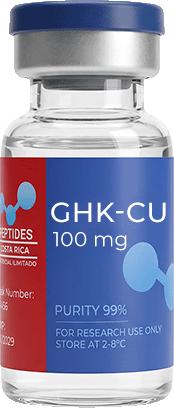
Most-ordered in this category: GHK-Cu.
workspace_premium
The Peptides Costa Rica promise
Every vial is stored cold and delivered fast. If a vial arrives damaged or doesn't match your order, tell us within 7 days with a photo and we replace it. No arguments.
Copper & Dermatological Peptides FAQ
Copper peptides, signal peptides and antioxidants used in dermatological and cosmetic science research.
From ₡31,165 per vial. 15% off 5+ vials and 20% off 10+ of the same product, applied automatically.
Yes. Most products are tested by an independent laboratory before sale, and their Certificates of Analysis are published in our COA database.
2–4 days anywhere in Costa Rica, from our own cold storage. No customs or import fees.
No. These products are supplied for laboratory research only. We don't provide dosing, protocols or medical advice.
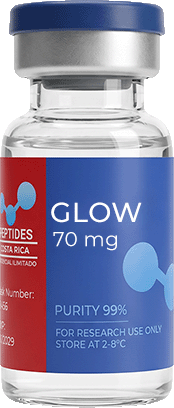
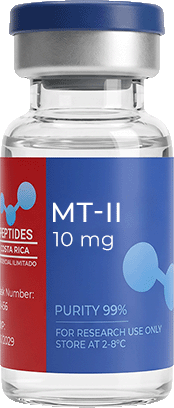
Copper & Dermatological Peptides brings together peptides used in laboratory research on skin cells, connective tissue and pigmentation: the copper tripeptide GHK-Cu, the GLOW blend, which combines GHK-Cu with BPC-157 and TB-500, and melanotan II. Peptides Costa Rica supplies them as research-grade material, with independent batch testing and delivery within Costa Rica. None of them is a skin care or cosmetic product, and everything here is supplied for laboratory research use only.
What Dermatological Peptide Research Covers
Skin research looks at the cells that build and maintain it. Fibroblasts make collagen and the other proteins that give skin its structure. Keratinocytes form the outer barrier. Melanocytes make melanin, the pigment behind skin color.
The peptides in this category are studied in cell cultures and animal models of each of those processes. GHK-Cu is used mainly in fibroblast and wound models. Melanotan II is studied for its action on the receptors that control pigmentation.
At Peptides Costa Rica, we supply these peptides for research purposes. We focus on giving clear product information, fair prices, and reliable local delivery service for customers in Costa Rica.
Compounds
About the Compounds in This Category GHK-Cu GHK-Cu is the tripeptide glycine-histidine-lysine bound to a copper ion, first isolated from human plasma in 1973. In cultured skin fibroblasts it has been reported to increase production of collagen, glycosaminoglycans and decorin, the materials that give skin its structure. Most of the remaining work uses animal wound models. The GLOW Blend GLOW combines GHK-Cu with BPC-157, a 15-amino-acid peptide studied mostly in rodents, and TB-500, a seven-amino-acid fragment of thymosin beta-4. No published study has tested the three together, so anything said about the blend is extrapolated from separate research on each component. Melanotan II Melanotan II is a synthetic analogue of alpha-melanocyte-stimulating hormone, developed at the University of Arizona in the 1980s. It acts on several melanocortin receptors, including MC1R, which controls melanin production. It has never been approved as a medicine, and regulators in several countries have warned against unlicensed melanotan products Reading the Research Findings in cultured skin cells and animal models describe how skin biology works. They are not evidence of any effect in a person. Nothing in this category is a cosmetic or skin care product, and nothing here is supplied for human use.
Why Choose Peptides Costa Rica’s Copper & Dermatological Peptides?
We supply high-purity research peptides with a focus on documentation, transparent pricing, fast domestic delivery and direct customer support.
scienceThird-Party Lab Tested All Peptides Costa Rica products are independently tested for purity, identity, and quality. Each batch is reviewed for peptide integrity, purity levels, and contaminants, with a COA included.
historyResearch-Grade Peptides Peptides Costa Rica supplies research-grade peptides made under strict quality-control standards. Products are synthesized for high purity & provided in stable lyophilized form for laboratory research.
lab_profileTrusted Peptide Supplier Peptides Costa Rica focuses on transparent sourcing, verified testing, and consistent product quality. Researchers rely on our peptide collections for dependable products, service & support.
How Copper & Dermatological Peptides Are Studied
Research on these peptides relies on laboratory models of skin cells and tissue, most of them in culture dishes or rodents.
Studies typically measure:
Collagen is the most measured output, because it is the main structural protein that fibroblasts make. These are laboratory measurements of skin biology, not evidence of any effect in a person.
Get In Touch
Questions about vial contents, GLOW or documentation? Our team can confirm what is in stock, the current price and the expected delivery window for your province, and can send the certificate of analysis for a particular lot before you order. We answer questions about products, documentation and delivery only, not about use. Contact us directly for larger or repeat orders.
How These Compounds are Used in Blends
Several products here share ingredients with products in other categories.
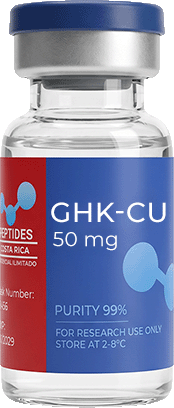
scienceGHK-CUGHK-Cu appears in four of the five products on this page: on its own in two vial sizes and in both GLOW blends. It is the same compound featured on our Copper Peptides page.
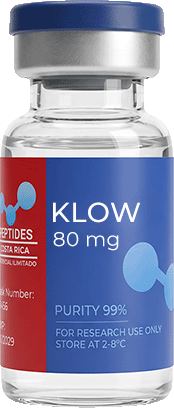
historyGLOW and KLOWGLOW contains GHK-Cu, BPC-157 and TB-500. KLOW adds a fourth peptide, KPV, and is listed in our Tissue Repair Compounds category.
lab_profileProduct availability can change based on our current stock.
Who Orders Copper & Dermatological Peptides
Orders in this category come mostly from laboratories working on skin cell biology, wound models and pigmentation.
Buyers typically include:
Our team can confirm availability, vial contents and documentation before an order is placed, and can send the certificate of analysis for the lot you receive.
Customer Success Stories
We take pride in the trust and loyalty of our customers. Numerous individuals across Costa Rica have experienced transformative results with our peptide products. Our testimonials section is a living showcase of positive outcomes, featuring stories of enhanced energy, impressive muscle growth, and dramatic reductions in body fat.
Trustpilot
Rated 4.5 out of 5
Buy Copper & Dermatological Peptides Across Costa Rica
Peptides Costa Rica supplies research-grade Copper & Dermatological Peptides throughout all seven provinces, for laboratories working on fibroblast and wound models, copper-peptide chemistry and pigmentation research. Customers can confirm current product availability, vial sizes, pricing, payment details, and local delivery arrangements directly with our team before placing an order. Delivery is within Costa Rica only.
Copper & Dermatological Peptides Delivery Across Costa Rica’s Seven Provinces
Product availability may vary. Contact our team to confirm the selected Copper & Dermatological Peptides, required quantity, final price, payment information, and delivery location before completing your order. All products are intended strictly for research use.
Ordering Peptides in Costa Rica
Peptides Costa Rica serves customers only within Costa Rica.
To place an order:
Review product availability and pricing.
Contact us directly to confirm stock availability.
Complete payment using one of the following methods:• Card Payment via Shield Hub Pay• Cash Payment
We arrange delivery locally within Costa Rica.
We handle orders directly and confirm availability before you make a payment.
Frequently Asked Questions
Copper & Dermatological Peptides is our category for peptides used in laboratory research on skin cells, connective tissue and pigmentation. It holds GHK-Cu, a copper-binding tripeptide; GLOW, a blend of GHK-Cu with BPC-157 and TB-500; and melanotan II, a synthetic analogue of a hormone involved in pigmentation. All are made by peptide synthesis and supplied as lyophilized powder. None is a cosmetic or skin care product, and most published findings come from cell cultures and animal models. Supplied for laboratory research use only, not for human or veterinary use.
Each compound is studied through a different mechanism. GHK-Cu binds copper tightly and holds it in a form that does not drive the harmful reactions loose copper can. In fibroblast studies it is linked to changes in collagen and matrix production and in the activity of many genes. BPC-157 and TB-500, the other two GLOW components, are studied mainly in rodent injury models. Melanotan II activates melanocortin receptors, including MC1R on pigment cells, which controls melanin production. These descriptions come from cell and animal research and establish no use outside the laboratory.
All products in this category ship as lyophilized powder in sealed vials. Store them refrigerated from arrival, away from light, heat and moisture, and keep each vial sealed until reconstitution; freezing the dry powder is an option for longer storage. Bacteriostatic water is the usual fluid, and our vials hold 3 ml, so reconstitution volumes stay within that. Add the water slowly down the inside wall of the vial and swirl gently rather than shaking. GHK-Cu and GLOW give a blue solution because of the copper, which is expected.
Published laboratory work in this area falls into a few groups. Fibroblast studies measure collagen, glycosaminoglycan and decorin production. Wound studies, mostly in rats and rabbits, track closure and new blood vessel growth. Antioxidant studies look at enzyme levels and inflammatory markers in cultured cells. Gene-expression studies have mapped which genes shift in the presence of GHK. Hair follicle studies in rodents form a smaller, separate line of work. Pigmentation research on melanotan II measures melanocortin receptor activity and melanin production in pigment cells. Results from cell and animal models describe skin biology, not effects in a person.
Orders are typically delivered within 2–4 business days from the date the order is placed. Delivery is within Costa Rica only. Timing can vary with carrier schedules, the delivery province and order processing. We confirm stock and the expected delivery window with you before an order is finalized.
Explore other categories
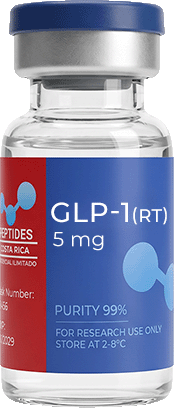 Metabolic & GLP-1 Compounds
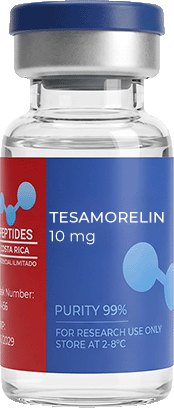 Growth Hormone Secretagogues
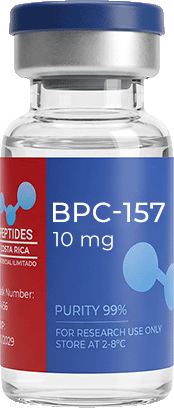 Tissue Repair Compounds
 Copper & Dermatological PeptidesCopper PeptidesCollagen Peptides
 Bioregulator Peptides
 Mitochondrial Compounds
 Nootropic & Neuropeptides
 Sleep-Related Neuropeptides
 Cardiovascular Research Compounds
 Reproductive Signalling Peptides
 Somatropin & Related Compounds
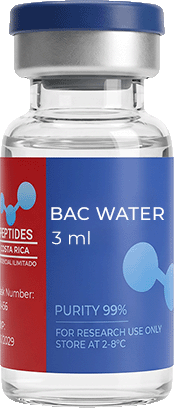 Bacteriostatic Water
For laboratory research use only. Not for human or veterinary use.