
 Free BAC Waterwith every order
Bioregulators
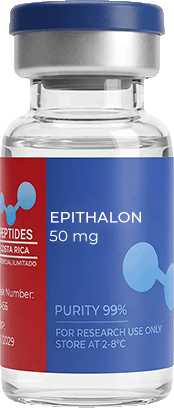
Epithalon
★★★★★5.0 Google · 4.6 TrustpilotIn stock
₡75,773
1 × ₡75,773 · + free BAC Water
Strength 1 option
Quantity Best discount applies automatically
Black Friday Early Bird
Ends in3days06h49min
4+1Buy 4, get 1 freeMix any deal vials · applied automatically
₡75,773. The bigger discount applies; not combined with volume pricing.
Quantity
COA on most productsMoney-back guarantee2–4 day delivery
Frequently ordered together
Bundle total
₡75,773
₡75,773
Specifications
FormLyophilized powder
Strengths50 mg
CategoryBioregulators
Storage2–8 °C, away from light
TypeTetrapeptide (Ala-Glu-Asp-Gly)
Molecular formulaC₁₄H₂₂N₄O₉
Molecular weight390.35 g/mol
CAS307297-39-8
Questions
The compound and amount on the label, as lyophilized powder (or ready-to-use liquid for blends and waters). Most products have a Certificate of Analysis confirming identity and purity.
2–4 business days anywhere in Costa Rica, tracked, from our own cold storage. No customs or import fees.
Card, SINPE Móvil or bank transfer.
15% off 5+ vials of the same product, 20% off 10+. The best discount applies automatically. Every order includes a free BAC Water 3 ml, and delivery is free over ₡89,145.
No. All products are for laboratory research use only. We don't provide dosing or medical advice.
Why order from us
scienceThird-party testedCOA on most products
ac_unitCold storage on site2–8 °C until dispatch
local_shipping2–4 day deliveryLocal stock, no customs
autorenewReplacement promiseDamaged or off-batch? Replaced
What people say
 ★★★★★
Excellent service, quality, and price. For me, they are the best in Costa Rica; I hope they never change.
Daniel Manzanares Quesada · Trustpilot
★★★★★Hay stock y son rápidos y asesoran muy bien, confiable los pagos y el producto llega en buen estado.
Botanical Cosmetic · Trustpilot
 ★★★★★
Son excelentes, mil estrellas.
Lic. Juan Alfonso Mata Chavarría · Google
More in Bioregulators
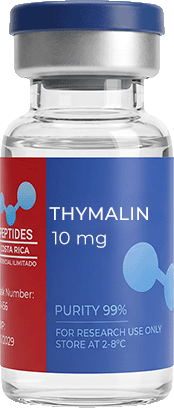
Research use only. Supplied for laboratory research. Not for human or veterinary use. We do not provide dosing or medical advice.
Studies
What Epithalon Is and What the Studies Report Sequence and Identity Epithalon is a tetrapeptide, four residues in the sequence Ala-Glu-Asp-Gly. Molecular formula C14H22N4O9, molecular weight 390.35, CAS 307297-39-8. It was identified as the putative active fragment of epithalamin, a peptide extract of bovine pineal gland, and is supplied here as a synthesised compound rather than an extract. Origin of the Compound The work originates with Vladimir Khavinson's group at the St Petersburg Institute of Bioregulation and Gerontology, which from the 1970s sought the shortest active sequences within organ-specific peptide extracts. Epithalon is the pineal entry in that series; Cartalax and Thymalin are others in the same programme. What the Telomerase Study Reported The finding the compound is known for: in cultured human somatic cells, treatment was reported to increase telomerase activity, lengthen telomeres, and allow division past the Hayflick limit, from passage 34 to beyond passage 44. That is an in vitro result in a cell line, published by the originating institute. Strength of the Evidence Almost all of the Epithalon literature comes from the institute that developed it. The human work is prospective cohort observation rather than randomised controlled trial, which sits low in the evidence hierarchy. Independent replication by unaffiliated laboratories is limited. No regulator anywhere has evaluated the compound. Widely cited is not the same as well established.
Why Choose Peptides Costa Rica’s Epithalon Peptides?
We specialize in supplying high-purity research peptides with a focus on transparency, fast domestic delivery, and dedicated customer support.
scienceThird-Party Lab Tested All Peptides Costa Rica products are independently tested for purity, identity, and quality. Each batch is reviewed for peptide integrity, purity levels, and contaminants, with a COA included.
historyResearch-Grade Peptides Peptides Costa Rica supplies research-grade peptides made under strict quality-control standards. Products are synthesized for high purity & provided in stable lyophilized form for laboratory research.
lab_profileTrusted Peptide Supplier Peptides Costa Rica focuses on transparent sourcing, verified testing, and consistent product quality. Researchers rely on our peptide collections for dependable products, service & support.
Epithalon Research Overview
Epithalon sits at the centre of the short peptide bioregulator programme founded by Vladimir Khavinson in St Petersburg. The premise of that programme was that organ-specific peptide extracts contain short active sequences, and that those sequences can be identified and synthesised. Epithalon is the pineal example: the proposed active fragment of epithalamin.
The finding that made it widely known was reported in cultured human somatic cells, where treatment was associated with increased telomerase activity, telomere elongation, and continued division past the point at which the culture would normally have stopped.
A substantial further literature covers rodent models and human cohort observation, spanning circadian and endocrine endpoints. Almost all of it originates from the same institute, much of it in Russian-language journals with limited Western indexing.
That concentration is the central fact about this evidence base. Independent replication has been limited, and the human work is observational rather than controlled. Recent publications from other groups exist, but the foundational results have not been broadly reproduced.
Epithalon is therefore a compound with a striking reported mechanism and a narrow evidentiary base. Both halves of that belong in any honest description of it.
Get In Touch
Have questions about Epithalon products or research-use details? Our team can help you review available options, product information, storage guidance, and ordering details.
Why Researchers Choose Epithalon
A four-residue sequence with published specifications, a documented origin, and stock held in Costa Rica.
scienceDefined SequenceFour residues, Ala-Glu-Asp-Gly, molecular weight 390.35, CAS 307297-39-8
historySimple to VerifyOne short sequence and one molecular weight make the mass spectrometry result unambiguous.
lab_profileDocumented PurityHPLC purity with chromatogram and batch number on the Certificate of Analysis.
inventoryReliable SupplyConsistent availability with fast delivery across Costa Rica.
Trusted Source for Research Peptides
We supply high-purity Epithalon and other research peptides with consistent quality, transparent pricing, and reliable local delivery. Every order ships from inside Costa Rica — no customs delays, no import duties.
scienceBulk SavingsSave more with bulk purchases. Buy five or more vials of the same product and get 15% off with clear, upfront pricing and no hidden conditions.
historySimple Ordering ProcessPlace orders through a simple process—review products, confirm availability, choose your payment method, and arrange delivery within Costa Rica.
lab_profileFlexible Payment OptionsChoose from secure payment options including SINPE Móvil, Zelle, or cash for smooth and convenient transactions.
inventoryTransparency & DocumentationWe provide Certificates of Analysis along with clear communication, verified stock, and straightforward pricing for complete trust.
How to order
- 1ChoosePick the strength and quantity. Bulk discounts apply automatically.
- 2CheckoutPay by card, or send the order on WhatsApp for SINPE or bank transfer.
- 3ReceiveDelivered in 2–4 days with your batch COA.
Epithalon FAQ
Epithalon, also spelled Epitalon, is a synthetic tetrapeptide with the sequence Ala-Glu-Asp-Gly. Molecular formula C14H22N4O9, molecular weight 390.35, CAS 307297-39-8. It was identified as the putative active fragment of epithalamin, a bovine pineal gland extract, by the St Petersburg Institute of Bioregulation and Gerontology. Supplied as a lyophilised powder in 50mg vials for laboratory use.
In cultured human somatic cells, treatment with the peptide was reported to increase telomerase activity, lengthen telomeres, and permit division past the Hayflick limit — from passage 34 to beyond passage 44. That is an in vitro result in a cell line, published by the institute that developed the compound, and it has seen limited independent replication. No mechanism at the receptor or gene-regulatory level has been established.
Epithalon and Epitalon are two spellings of the same compound — a synthetic tetrapeptide (Ala-Glu-Asp-Gly) derived from the pineal gland peptide Epithalamin. The "Epitalon" spelling is more common in Russian and Eastern European research literature, where the compound was originally developed by Vladimir Khavinson's team at the St. Petersburg Institute of Bioregulation and Gerontology. "Epithalon" is the more common spelling in Western literature. Both refer to the identical molecule.
Both come from the same Khavinson programme in St Petersburg. Epithalon is the pineal entry, a four-residue synthetic sequence studied in telomere and circadian models. Thymalin is a thymus-derived peptide preparation studied in models of immune senescence and thymic involution. They share a research tradition and its limitations: work concentrated in one institute, limited independent replication, no regulatory approval. Both are available at Peptides Costa Rica.
Store unreconstituted vials refrigerated at 2–8°C in lyophilised form; freeze for long-term storage. Once in solution the peptide is less stable and should be kept refrigerated and protected from light. Avoid repeated freeze-thaw cycles. Keep vials sealed until use. Material is non-sterile. These are conditions for preserving the material, not statements about what it does.
Cultured human cell lines, rodent models, and human cohort observation. The cell-culture work is where the telomerase findings come from. The human work is prospective cohort rather than randomised controlled trial. Almost all of it originates from the St Petersburg institute that developed the compound, and much is published in Russian-language journals with limited Western indexing.
Orders are typically delivered within 2–4 business days from the date the order is placed. Delivery times may vary depending on the shipping destination, carrier delays, and order processing times.